
When speaking about Iranian Mithraism, we refer to a spirituality, philosophy, religion, and worldview that is based on Iranian religion. However, one shall not confuse Iranian religion with Zoroastrianism. In order to understand this difference, one has to arrange the different terms and their relations to each other.
Iranian Religions (plural form)
Today, Iranian religions acts as an umbrella term for different religions that originate or are still lived in the cultural sphere of Iran or in the state of Iran. They can include Zoroastrianism (ZO), Bahaism, but also different forms and philosophies of Islam, as also some historical, hard evidence based teachings such as those of Mazdak, Zurvanism, or the Khurramites. In a wider sense, also Manicheism and different Sufi movements are placed in that category. When we speak of Iranian religion, this is not what we are referring to.
This model of view is based on an established view of Iranian religions in the social sciences that has a very static, linear view on the Iranian sphere and cannot grasp the reality and complexity of what is there. Also, in spite of new appearing evidences and consistent new findings in research, this view has not changed since its establishment.
An Argument for Eranian Religion
When we speak about Iranian religion (i.e. Eranian religion), we mean the branch of Iranian worldview, philosophy, spirituality, and religion that has early on split from the ethnological Aryan branch of people into Irano-Aryan and Indo-Aryan. In the social sciences, it is often called early Iranian religion or Iranian paganism.
Although the early Iranian religion is taken up as a subject of its own, the social sciences have misplaced it in the development of of Iranian religions and philosophies. It was falsely assumed that the early Iranian religion had dissolved itself in Zoroastrianism, from there, brought forth different sects and influenced other religions, and from there, was replaced by Islamic schools of thoughts. This linear view is an outdated, lazy one that was, maybe, during its invention a useful tool to understand the Iranian cultural sphere from the outside, but has never matched reality. It was never able to grasp the complexity that was present in Iran, Mesopotamia, the Caucasus, India and Central Asia. This linear and isolated view has to be dismissed fully.
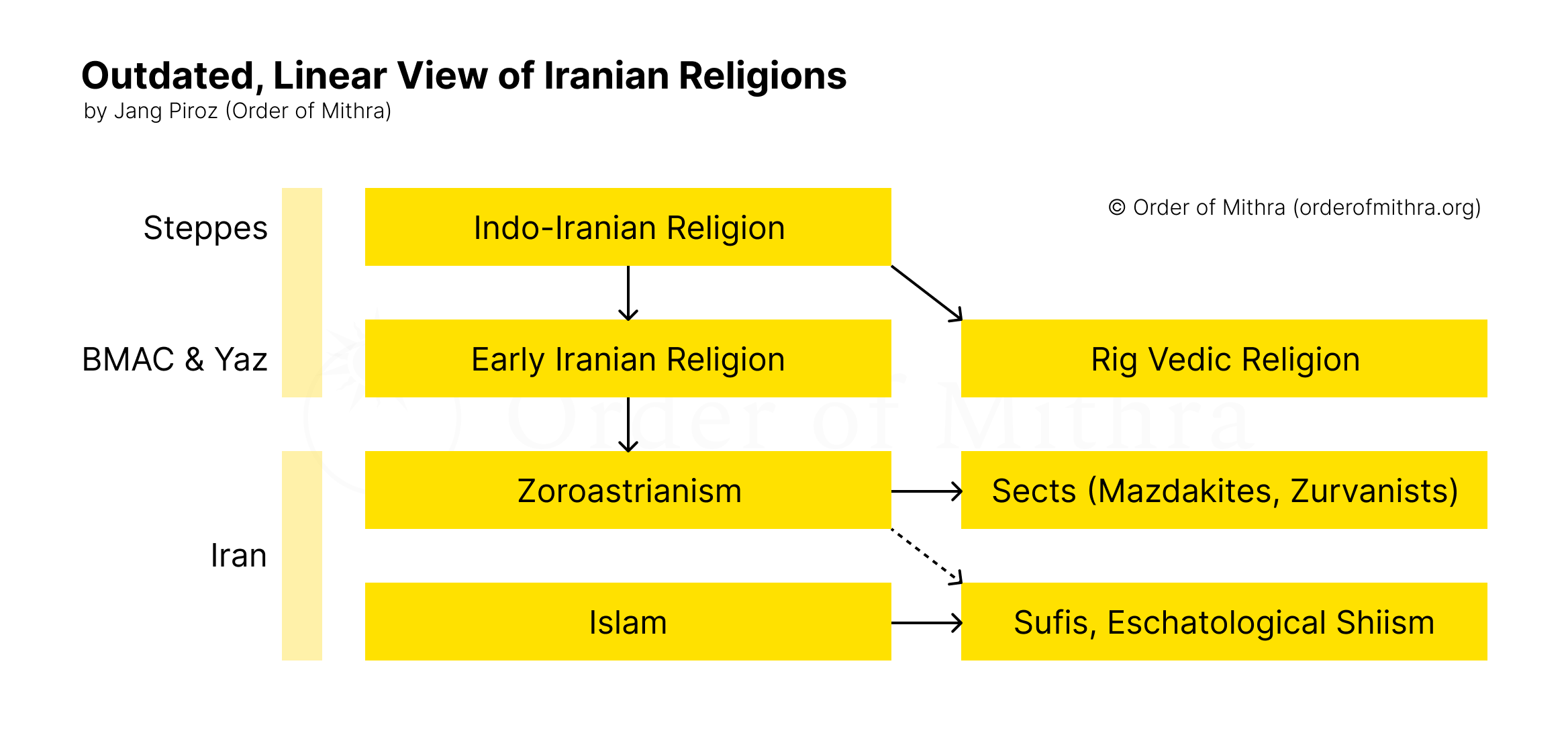
Figure 1: Outdated, Linear View of Iranian Religions
The reality looks different. The argument defended here is: The Eranian religion (ER), since its split from the Aryan (Indo-Iranian) religion branch, has existed as such parallely to other branches, and survived in syncretic forms up until today. The theory is this:
- ER is the native form of the Iranian religions
- ER has existed parallely to ZO
- ER has not undergone the reforms of ZO
- ER has influenced ZO in its beginning, and throughout its development
- ER was transmitted mainly orally through myths, local religions, societal structures
- ER can be observed throughout its history in literature, although poorly, and definitely in Eranian philosophies, worldviews, iconography, historical events, and society
- ER in its original form shares the same roots as the Rigvedic and Zoroastrian religions
The development of this landscape has taken place in such a way: After the split of the Indo-Aryan and Erano-Aryan religions, the Eranian branch had a religion that was distinct. It must have been a religion that was heavily influenced by the Aryan steppe religion and the BMAC culture. This has brought forth the Eranian religion (also called early Iranian religion or Iranian paganism).
The Reform of Zoroaster
From this Eranian religion, Zoroastrianism was born as a reform movement and branch. Due to its formality in written script, it gained significant power. Its worldview around a prominent god has attracted the interest of rulers, who legitimized their place in society through a centralized view of a cosmic given world order.
However, in the peripheries, i.e. the steppes, rural areas, pastoral fields, the centralized view of the world order did not gain ground. First of all, the literacy of the people was missing. Secondly, the steppe and pastoral lifestyle was not interested in ruling the world, and thus the society in a centralized manner, but by binding contracts between the Eranian tribes that had flooded the Eranian highlands, and who also remained in the steppes; among the tribes, none was to be considered superior by nature against the other, because there was not a societal hierarchy that allowed this, instead, the ethics and contracts between the tribes guaranteed a proper world order. Third, the clerics of ZO were not mainly interested in taming the tribes of the steppes, the pastoralists, and distant rural areas, but rather had to rely on them, since the Eranians, in the early stages, were not fully agrarian yet (we are speaking about the pre- and the Old-Iranian era).
With time, the Eranian society in the highlands became more and more agrarian. The steppes remained pastoralists. Kings, rulers, and bureaucrats favored a centralized, orthodox, binding worldview against a decentralized, tribe-based one. During the Achaemenid time already, a purge of non-Zoroastrian clerics had happened during the Magophonia. The Arsacid era was the last one that had enjoyed fully the original Eranian religion due to the nomadic character of its rulers and the state structure that was based on an inner peace of the tribes and major houses and clans.
With the Partho-Sasanian era the grounds for a second reform were initiated. The Sasanian empire was always heavily relying on Parthian houses, clans, and figures. During its initial phase, the political allegiances were able to hold and support the royal clan of the Sasans. However, through inner turmoil, power politics, and throughout the era of that empire, until the end of the empire, the clerics of ZO seem to have understood that a rethinking was necessary. Approximately 200 years after the fall of the nomadic Arsacids, the Pars-based clerics began a process that could be described as a second reform. The already centralized, dogmatic ZO became heavily orthodox. Ethics and new worldviews were integrated into the literature of ZO. Although still nurturing from the base of ER, ZO gained its final form between 500-700 CE.
False Conception
It would be false to think that the new additions into the literature of ZO must have been present among all Eranians throughout the Eranian highland, the Caucasus, Mesopotamia, the Steppes, and India. Rather, ZO had become an elite religion, projected by the royal Sasanian house down to its subjects for political purposes. During the developments of ZO – and let’s keep in mind that one of the main targets of ZO were the Mithraist Parthian noble hous es -, ZO always had to balance between imposing a new doctrine, by simultaneously not offending its subjects. Correspondingly, the elements of ER in ZO have to be understood: Not that ZO was the ER, but that ZO had kept a lot of elements of ER in order to integrate, assimilate followers of ER into its own dogma.
What is speaking for this argument are some ambivalences in the social sciences:
- Medians and Akhaemenids were not Zoroastrians, but used Iranian religious iconography
- Arsacids were not Zoroastrians and are considered in the social sciences as followers of an Iranian religion, without any concluding sentence
- Parthian houses were not Zoroastrians and clearly exhibit a different religious stance
- Mazdakites and Khurramites are not Zoroastrian and are even considered heretics by ZO
- Parthian-Sasanian conflicts exhibit religious characters
- Later local occurences, rites, philosophies (think of Ishraqism, Rumi or similar), that were falsely and euphorically ascribed to ZO, are in fact not Zoroastrian, but clearly Iranian
- It is inconceivable how a twicely reformed religion could have taken with them the followers of the older religion
- It is inconceivable how an orthodox religion such as ZO could have spread to the entirety of Eranians with the means of that time
Eranian Mithraism
Having this nexus of above elements, but not being able to attach it to any religion known by the social sciences, leaves us only one possibility: During the existence of ZO, there indeed was an ER that existed parallely to it. To stop playing the dumb: This Eranian religion had continuity since the beginnings and became noticeable mainly through concepts that make as believe that the ER had become Eranian Mithraism in the middle Eranian (Parthian) era; concepts such as:
- Mithra, which in the Eranian sense is: cosmic justice, cosmic ethics, chivalry, gallantry, contract, oath, covenant, brotherhood, brotherly love, friendliness, altruism, innatism/intuition, irrationalism, love, the sun, the light, thereby, the direct path to Truth
- Arda (Arta, Asha), which in the Eranian sense is: cosmic order, cosmic path of Truth, Truth, thereby, following it (Mithra’s domain), bliss, illumination, enlightenment; the source of law
It is exactly this ER and Eranian Mithraism, from which groups, structures, and movements such as the following emerged or were influenced:
- Mazdakism
- Roman Mithraism & Mithrae
- Mahayana Buddhism (influence)
- Manicheism
- Bahram’s revolt
- Sharvaraz’s revolt
- Khurramism & Babak’s revolt (spiritual, militant order)
- Sunpadh’s revolt
- Behafaridism
- Mazyar’s revolt
- Ar-Razi’s philosophy
- Suhrawardi’s philosophy (Ishraqism, Illuminationism)
- Rumi’s philosophy of Love
- Javanmardi (principals of chivalry)
- Futuwwa / Fotovvat
- Ayyars (militant order)
- Yarsanism / Kakaism / Ahl-e Haqq (called religion of Friends [yar], religion of Brotherhood [kaka] or followers of Truth [haqq])
- Raye Haqq (Path of Truth) in Dersim
- Main concepts of Sufis such as Marefat (innate knowledge), Haqiqat (Truth), Tariqat (Covenant), Shariat (Law)
- Some Shia Sufi movements of Northern (N, NE, NW) Iran (militant orders)
- Orders of Zurkhanehs (traiditional house of strength for men in Iran)
- Pahlavani / Koshti (wrestling sports for men in Iranian cultural sphere)
We can see the footprint of the Eranian Mithraism in all those groups and movements, differently expressing themselves – in some more, in some less – but mainly with these pillars:
- Innatism / Intuitive / Secret knowledge to reach Truth (spiritual; epistemology)
- Ethics (incl. strong sense of justice & if necessary, militantism) to correspond to Truth (cosmic; ethics)
- Order / Covenant structure as part of ethics for aligning with Truth (the order being the micro-order of a bigger macro-order) (ontology, ethics)
- Internal Ethics, applicable only for the members, no universal claim for exclusive correctness (dogmatism, exclusivism), but openness of the order for everyone
- Savior figure through reincarnation (eschatological framework, circular and process understanding of existence) and concept of liberation
Therefore, a proper look on the development of religions in and around the Iranian landscape correctly looks like this:
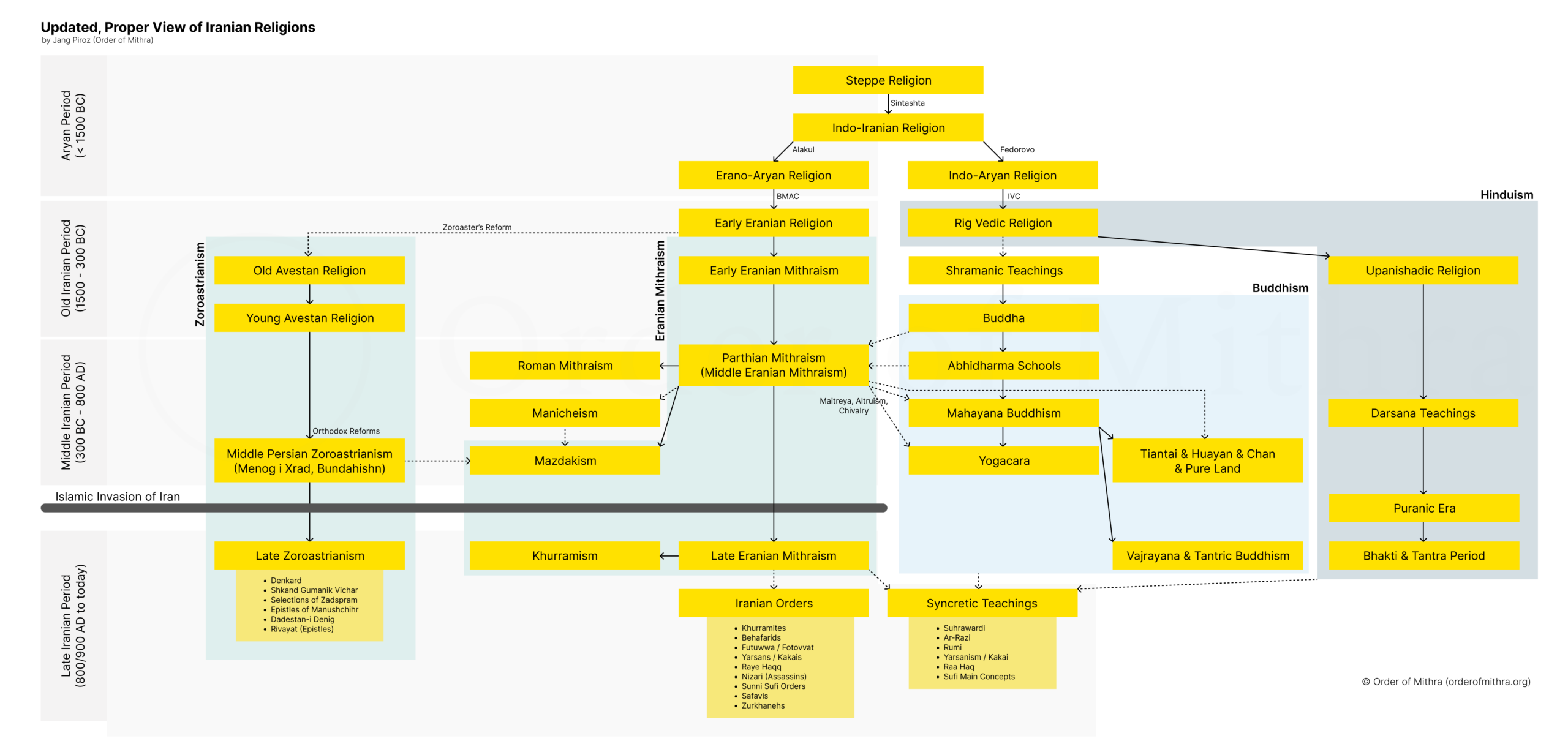
Figure 2: Updated, Proper (Complex) View of Iranian Religions
Outlook
ZO remained very orthodox, isolated through its own doctrine (similar to Orthodox Hindu schools of Darsas). What is often attributed to ZO or being an influence of ZO, is in fact the influence of ER and Eranian Mithraism. To highlight this fact: Imagine, how stubborn this false view has to be, that even if Suhrawardi claims that his illuminationist philosophy is based on an already existing, but NOT Zoroastrian teaching, the social sciences still called his philosophy as being Zoroatrian or being influenced by ZO.
Share This, Choose Your Platform!
Follow & Contact Us

We reestablish the Mithraic traditions. Subscribe now and stay in touch.