
According to a study published in 2015, Abolala Soudavar’s Discrediting Ahura Mazdā’s Rival makes a provocative claim: the Avestan (Irano-Zoroastrian) tradition still carries faint “fossils” of an older Iranian religious landscape in which Apąm Napāt was not a secondary figure, but a creator-god in his own right. If that’s true, then the later elevation of Ahura Mazdā as the singular supreme Creator wasn’t simply a smooth theological evolution – it also involved sidelining a serious competitor.
Core thesis
Soudavar builds his case around what he treats as a historical oddity: how does a deity with creator status lose that role? Drawing on a point associated with Mary Boyce, he argues that this kind of demotion doesn’t happen “organically.” In his view, it usually takes political force—and he situates the major turning points in the world of Achaemenid state power, especially under Darius and the aftermath of anti-Magian violence often discussed under the label “Magophonia.”
Methodologically, he’s skeptical that philology alone can solve the puzzle, because he sees the Avesta as layered, difficult, and sometimes deliberately opaque. So he pairs textual readings with iconography, treating images as another archive—one that can preserve what later theological editing tries to mute.
The older “tandem” ideology: Mithra + Apąm Napāt
One of Soudavar’s most interesting reconstructions is what you could call a “two-pillar” model of sovereignty: a Median-era day/night tandem in which royal legitimacy depended on two complementary powers:
-
Mithra as the force of day—sun, light, fire, watchfulness
-
Apąm Napāt as the force of night—water, depth, and (in older strata) even a kind of “burning water” or fire-within-water motif
In this reading, kingship isn’t secured by a single divine sponsor, but by the balance of both. Soudavar points to Avestan passages where Mithra and Apąm Napāt appear side by side, functioning like parallel guarantors of authority—agents who strengthen rule and suppress rebellion.
How the “rival” is discredited
From there, Soudavar reads later Zoroastrian/Achaemenid developments as a long campaign to consolidate divine sovereignty under Ahura Mazdā, while managing the awkward fact that Apąm Napāt remained too important to simply erase.
-
With Darius, Ahura Mazdā is pushed to the front as the supreme legitimizer. The older day/night split is pressured toward unity, but not necessarily through immediate demonization of older powers.
-
Under Xerxes, the posture becomes more aggressive. Soudavar emphasizes Xerxes’ claim to have destroyed a sanctuary associated with daiva worship and to have banned such worship—framed here as part of tightening the ideological boundary against rival cults.
-
By Artaxerxes II, Soudavar argues, the political theology still needs something like the old solar/aquatic balance—especially for khvarenah (royal glory) symbolism—but Apąm Napāt is too “dangerous” as a potential rival. The workaround is an aquatic substitute: Anāhitā rises as a sanctioned water-divinity who can carry the aquatic half of legitimacy without challenging Mazdā’s supremacy.
-
Over time, the pattern becomes a controlled integration: older and popular gods are kept, but repositioned as subordinate within a Mazdā-centered framework—what Soudavar sees as a move away from a stricter monotheistic reading of Zoroaster.
A recurring hinge in the argument is the “daeva problem.” Soudavar stresses that daeva did not necessarily begin as a simple label for “demon,” and that the act of converting older gods into demons signals a deeper political-religious rupture, not just a tidy doctrinal shift.
Part II: iconography as the “missing archive”
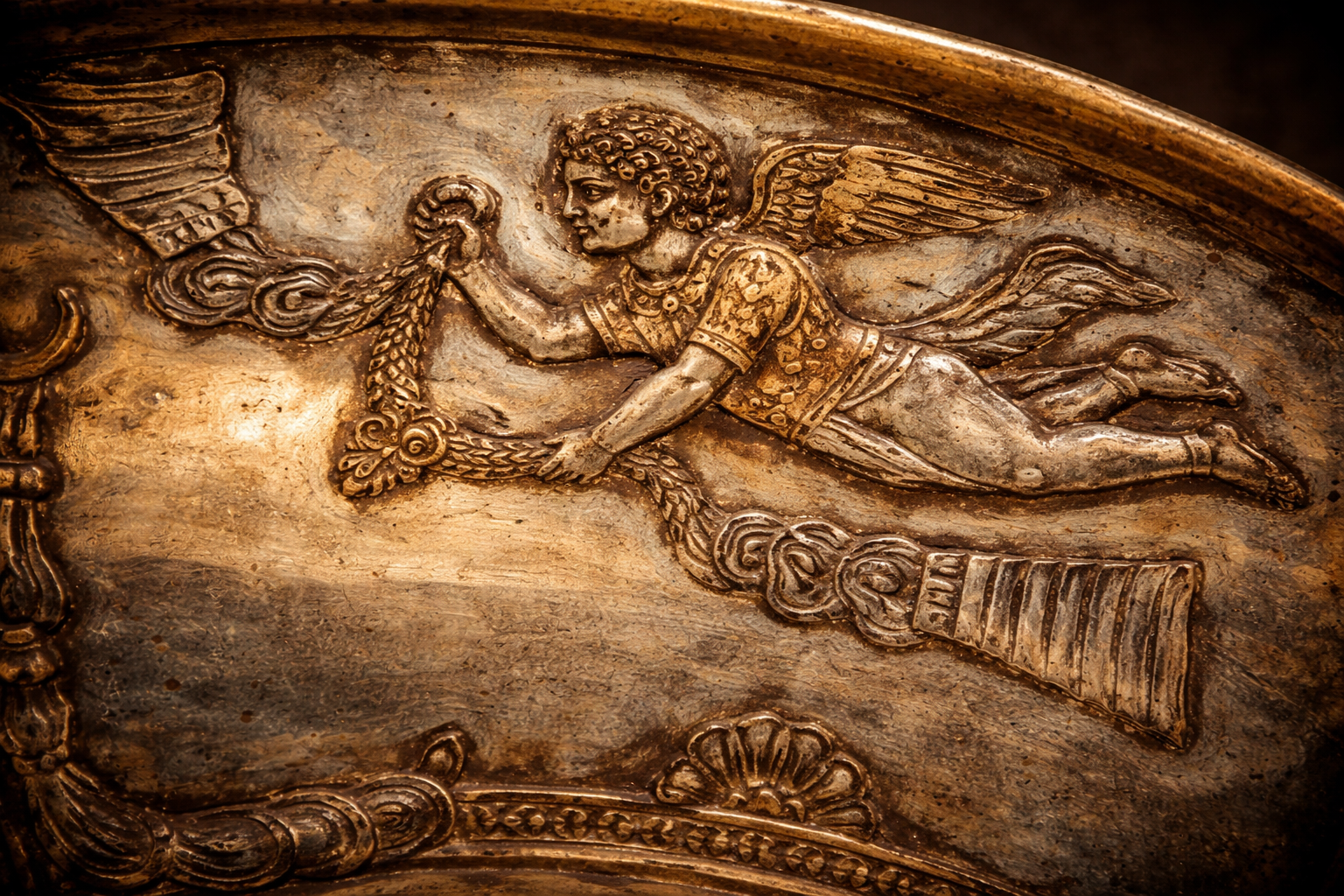
Where the text gets especially bold is in its insistence that images remember what texts try to forget. Soudavar treats iconography as a kind of shadow-history: artisans and royal imagery can preserve older religious structures even when official theology tries to streamline them.
In that spirit, he links visual traditions to themes of khvarenah and to the long survival of “mehr-āb/mihrāb” symbolism that he associates with the Mithra–Apąm Napāt pairing. He also argues that Apąm Napāt is gradually rhetorically reshaped into a “Child of Waters,” and then visually diminished—opening space for Anāhitā to appear as a maternal “Lady of the Waters” who effectively absorbs the aquatic role.
Scholarly posture (tone + side arguments)
Soudavar’s tone is openly combative toward mainstream Avestology. He argues that the Avesta is too consequential to be left to narrow technical habit, and he repeatedly claims that mistranslations and inherited assumptions have distorted major concepts—so the entire theological landscape has been read through the wrong lens.
Share This, Choose Your Platform!
Follow & Contact Us

We reestablish the Mithraic traditions. Subscribe now and stay in touch.